The AMALGAM Research Project: Language Phenotyping in Autism Using Machine Learning (2024-2025) |
| PI: Assoc. Prof. Eleni Peristeri |
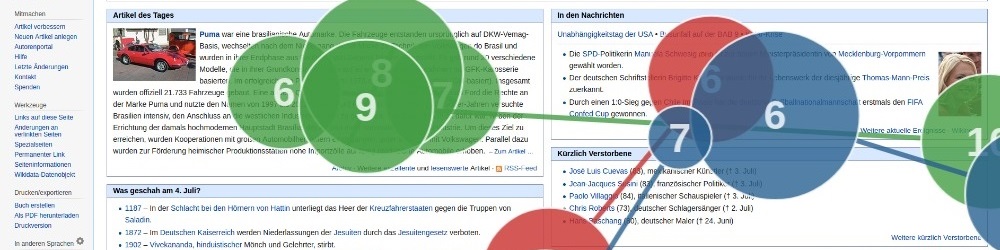
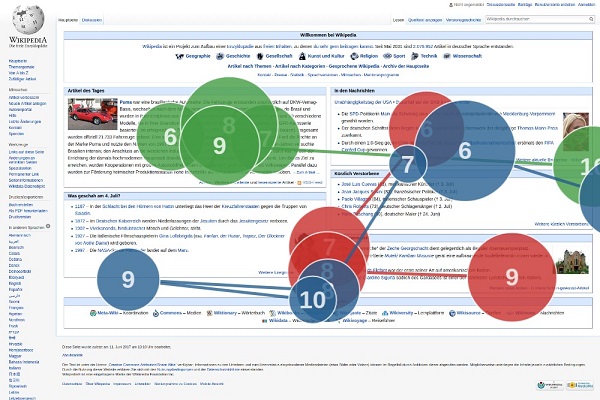
The AMALGAM projects aims to investigate qualitative and quantitative differences between children with Autism Spectrum Disorder and typically-developing children at the different stages of narrative production and comprehension processes. The AMALGAM project will employ eye-movement paradigms to capture the processes that underlie message conceptualization and formulation in narrative production, and the integration of different sources of information (linguistic, cognitive) in narrative comprehension. The project will also employ EEG-based metrics of autistic children’s theory of mind skills as potential biomarkers of Autism Spectrum Disorder. Taking advantage of the multimodal nature of the AMALGAM project and Machine Learning approaches, we aim to provide robust neurocognitive outcome measures to characterize the large heterogeneity in the autistic language phenotype, which can be used to inform effective interventions for the specific population. Project website: https://www.enl.auth.gr/amalgam |
Linguistic Perspectives on Dementia: an investigation of lexical, syntactic & content complexity in the narratives of Greek speaking patients with Mild Cognitive Impairment and Alzheimer’s Disease (DemLENS) (2020-2023) |
| PI: Maria Kaltsa |
| The overarching goal of DemLENS is to investigate the key linguistic
characteristics of Greek speakers with dementia and the decline of language
skills due to changes in cognitive function. DemLENS’ novelty lies on its
interdisciplinary research methodology since it integrates the clinical
evaluation, the neuropsychological assessment, neuroimaging analysis and
thorough linguistic profiling via language production data. Specifically, it
examines the lexical, syntactic and content complexity of spoken language of
Greek speakers. The participants of the study are (a) young healthy adults,
(b) healthy elders, (c) patients with preclinical AD identified as patients
with Subjective Cognitive Impairment (SCI), (d) patients with Mild Cognitive
Impairment (MCI) and (e) patients with Alzheimer’s Disease (AD) at the mild/moderate
stages. The examination of narrative production along the life span aims at
identifying the indicators of language divergence that could help the early
diagnosis of AD, thus facilitating the clinical process in distinguishing
those with MCI/AD from those who are cognitively intact. Project website: https://demlens.enl.auth.gr/ |
Postdoctoral Research Project: The Assessment of Language Development and Early Cognitive Function via the Eye-Tracking Methodology in Infants & Toddlers (2019-2022) |
| Postdoctoral Researcher: Maria Kaltsa Supervisor: Prof. K. Nicolaidis |
| The testing of visuocognitive development in pre-term infants shows strong interactions between perinatal characteristics and cognition, learning and overall neurodevelopment in infants. The assessment of anticipatory gaze data of object-location bindings via eye-tracking can provide useful information for the early cognitive function during the first year of life. The project aims at developing a novel assessment tool, a Delayed Match Retrieval (DMR) paradigm via eye-tracking as a measure for visual working memory (VWM) skills with the aim to identify possible neurodevelopmental delays within the first year of life so that early intervention can be introduced. 118 preterm and full term infants have participated in the project so far. |
ARISTEIA - Individual Differences in Anaphora Resolution: Linguistic and Cognitive effects (IDAR) |
| PI: Prof. Ianthi Maria Tsimpli In collaboration with |
| This project aims to explore a number of individual differences, such as age, educational background and differences in various cognitive tasks that can potentially exert an effect in anaphora resolution as presented in a series of linguistic tasks. The results of this project are planned to be presented in various national and international conferences. More information about the project can be found here. |
THALIS - Bilingual Acquisition & Bilingual Education: The Development of Linguistic & Cognitive Abilities in Different Types of Bilingualism (BALED) |
| PI: Prof. Ianthi Maria Tsimpli In collaboration with |
| The main aim of the project is to include the factors of monolingual / bilingual education and type of bilingualism in the detailed investigation of the interaction between linguistic and cognitive abilities. Linguistic abilities are differentiated in terms of level of linguistic analysis, such as vocabulary, syntax, pragmatics in order to identify the ones which may be affected in bilingualism. Accordingly, the project seeks to identify potential correlations among (i) types of bilingualism, (ii) types of education (mono- or bi-literacy), (iii) aspects of language knowledge and processing and (iv) cognitive abilities. The outcome of the study will shed light on the nature of the cognitive and linguistic interaction in different types of bilingualism and the effects of literacy development on this interaction. The outcome of this project will provide useful guidelines on the educational scheme which enhances bilingualism and bilingual literacy development most. More information about the project can be found here. |
Subject-object ambiguities and the role of Aspect |
| PI: Prof. Ianthi Maria Tsimpli In collaboration with |
| This is an eye-tracking study on English as a second language of Greek speakers. The aim is to investigate the role of aspectual morphology in detecting local ambiguities when processing sentences in the second language. The preliminary results from this experiment have already been presented in two major international conferences (Boston University Conference on Language Development; Architecture and Mechanism of Language Processing). |
Cross-linguistic Narrative Development Project CDI-III |
| PI: Prof. Ianthi Maria Tsimpli In collaboration with |
Subject pronoun interpretation: Native Language |
| PI: Prof. Ianthi Maria Tsimpli In collaboration with |
| The interpretation of null and overt subject pronouns in sentences with backward anaphora with child and adult native speakers of Greek. |
Subject pronoun interpretation: Italian L2 Speakers of Greek |
P.I.: Prof. Antonella Sorace - University of Edinburgh In collaboration with |
Iraklitos II Project in O.P. ‘Education’ Research Grant (2008 to 2012): The Acquisition of Telicity in the Native Language |
| PI: Prof. Ianthi Maria Tsimpli New Researcher: Maria Kaltsa - Aristotle University of Thessaloniki |
Netherlands Organisation for Scientific Research NWO (01/2009 to 01/2012): Interdisciplinary Perspectives on Multilingual Development |
| PI:
Prof. Monika S. Schmid - University of Groningen In collaboration with |
COST Action ISO804 (2009 to 2013): Language Impairment in a Multilingual Society: Linguistic Patterns and the Road to Assessment |
| PI:
Prof. Sharon Armon-Lotem - Bar-Ilan University, Israel In collaboration with |
AUTH Research Committee Research Grant (09/1998 to 03/2000): A Greek Diagnostic Test of Verbal Intelligence |
| PI: Prof. Ianthi Maria Tsimpli In collaboration with |
| The test provides measurements of verbal abilities in production and comprehension of vocabulary, syntax and morphology. There is a preschool and a school age version. |
Karatheodoris Research Grant (11/2001 to 11/2004): The Development of Functional Categories in L2 Greek |
| PI:
Prof. Anna Roussou -University of Patras In
collaboration with Prof. Ianthi Maria Tsimpli |
| In this project we investigated the acquisition of determiners and clitics in Greek as a second language. We tested a group of Slavic speakers who were exposed to Greek after immigrating to the country and without being exposed to structured Greek input. Results have already been presented at the 6th International Conference on Greek Linguistics (ICGL) at Crete, at the 13th International Conference on Applied Linguistics at Thessaloniki, at the 7th ICGL, York and at the Generative Approaches to Language Acquisition Conference 2005, Siena. |
Iraklitos Project in O.P. ‘Education’ Research Grant (2003 to 2006): The effect of morphophonology and the interpretability of features in the grammar of typically developing and Specifically language-impaired children |
| PI: Prof. Ianthi Maria Tsimpli New Researcher: Maria Mastropavlou - Aristotle University of Thessaloniki |
| In this doctorate thesis M. Mastropavlou investigated the development of nominal (gender, case, number) and verbal (tense) features in Greek SLI grammars in relation to age-matched and language-matched controls. |
Morphological cues in sentence processing |
| P.I.: Prof. Ianthi Maria Tsimpli, Dr Despina Papadopoulou |
| We investigate the role of morphology, such as Case and S-V Agreement, in the on-line processing of temporally ambiguous constructions with native speakers – adults and children – and L2 learners of Greek. |
IKYDA 04, Greek Institute of State Scholarships and DAAD Research Grant (2005 to 20007): Grammatical Features in Bilingualism and Specific Language Impairment: The Development of Subordinators and Prepositions in Bilingual and SLI Children |
| PI: Prof. Ianthi Maria Tsimpli In collaboration with |
We investigate the developmental patterns that characterize typical and atypical acquisition of Greek and German in the domain of morphosyntax and, specifically,
|
PENED 03, General Secretariat of Research and Technology Research grant (11/2005 to 11/2008): Sentence processing & interpretation in Greek: a comparative study between psycholinguistic findings and corpus-based analyses |
| PI: Prof. Ianthi Maria Tsimpli In collaboration with |
| We compare data from on-line reading experiments and corpora analyses of written and oral language. The main purpose of the project is to test the predictions of experience-based sentence processing models. The phenomena we investigate are: Preliminary results have been presented at: 13th GALA, Thessaloniki; 17th International Symposium of Theoretical and Applied Linguistics, Thessaloniki; 30e Colloque International de Linguistique Fonctionnelle, Nicosia; Workshop on “Experimental Evidence for Minimal Structure”, 29th DGfS, Siegen, Germany; 3rd Meeting of Postgraduate Students, University of Athens; International Workshop on “Frequency and Language Development”, 15 Wuppertaler Linguistisches Kolloquium, University of Wuppertal, 2008, Germany. |
General Secretariat of Research and Technology, Corresponding board in Cyprus Research Grant (09/2007 to 09/2008): Linguistic abilities in children with Specific Language Impairment |
| PI: Prof. Ianthi Maria Tsimpli In collaboration with |
| In this project we investigated the acquisition of past tense marking in Cypriot Greek and Greek SLI children in relation to age-matched and language-matched controls. Results of the study have been presented in 19th ISTAL, Thessaloniki. |
Netherlands Organization for Scientific Research (05/2008 to 05/2010): Age Effects on Language Development in Early Child Bilingualism |
In collaboration with Prof. Ianthi Maria Tsimpli - Aristotle University of Thessaloniki |
| In this project we investigate whether there are age effects in early child bilingualism. The main questions are: What is the optimal age at which exposure to a second language should take place? Does an early start always guarantee success? Are there other factors interacting with age which should be taken into account? We investigate the longitudinal development of three different groups of English-Greek bilinguals – bilingual first language (2L1) children, ‘early successive bilingual’ children and second language (L2) children. Our focus is the acquisition of voice morphology and transitivity alternations, and grammatical gender in Greek. Results of the study were presented in ISB7 (International Symposium on Bilingualism 7) in Utrecht, July 2009, DGfS (2010), Boston University Conference on Language Development (2010), Generative approaches to Second Language Acquisition (2010). |